Instant issuance has become a make-or-break capability for card programs that cannot afford long delivery windows, manual onboarding delays, or poor first-use rates. When people search for Instant Issuance: The Complete Guide to Instant Card Issuance, they usually need a practical answer fast: how it works, what it costs, where it fits, and how to launch it without creating compliance or fraud headaches.
That urgency is exactly why providers like Physical DeFi Card are gaining attention. Businesses across fintech, neobanking, payroll, crypto, travel, and embedded finance want cardholders to receive spending access immediately, whether through a branch printer, an in-app push to a digital wallet, or a tightly controlled hybrid flow that later upgrades to a personalized physical card.
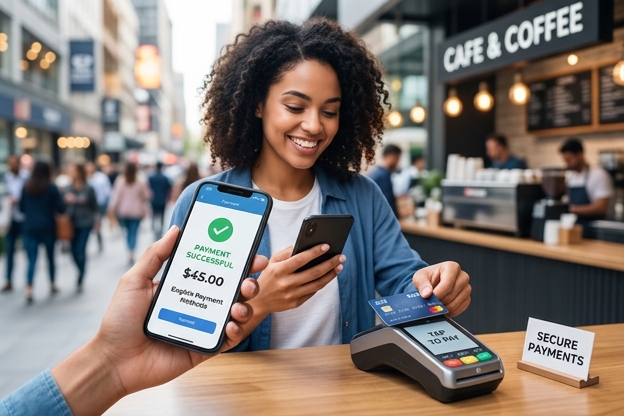
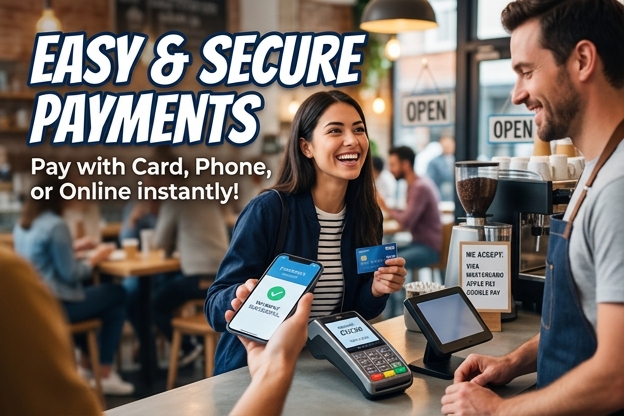
Instant card issuance is the process of generating a payment card for immediate use, either as a virtual card or as a physical card printed and activated on the spot. It shortens the time between approval and first transaction, helping issuers improve activation, customer satisfaction, and revenue while reducing abandonment during onboarding.
The real opportunity is not speed alone. It is the ability to connect identity verification, risk controls, tokenization, funding, and card delivery into one smooth customer journey that feels modern instead of fragmented.
Table of Contents
- What instant card issuance means in practice
- Why businesses are investing in instant issuance
- How the instant issuance workflow actually works
- Physical, virtual, and hybrid issuance models
- How instant issuance compares across use cases
- Risks, compliance demands, and operational limits
- A real-world view from Physical DeFi Card
- How to launch an instant issuance program
- What is changing next
- Final takeaways and next steps
What instant card issuance means in practice
At a surface level, instant issuance sounds simple: approve a user and give them a card immediately. In production, though, it is a coordinated payments infrastructure function involving card network rules, KYC and KYB checks, BIN sponsorship or issuer processing, token provisioning, funding logic, fraud scoring, personalization rules, and lifecycle management.
There are two dominant forms. The first is virtual instant issuance, where a card is generated in real time and pushed for online use or tokenized into Apple Pay or Google Pay. The second is physical instant issuance, where a card is produced at a branch, kiosk, event location, or controlled distribution point, often with limited personalization at the moment of issue.
For many brands, the most effective structure is a hybrid. A user receives immediate virtual access for wallet and ecommerce spending, then receives a personalized physical card later. That model often delivers the best balance between speed, fraud control, and logistics efficiency.
Why businesses are investing in instant issuance
The old wait-and-mail approach creates friction at the worst possible point: right after customer approval. The user is excited, qualified, and ready to transact, but the product asks them to wait several days. Every extra step creates a drop-off risk.
According to a 2024 report by Deloitte on digital banking experience, customer expectations now center on immediate access and low-friction onboarding, especially for mobile-first financial products. Mastercard has also emphasized in recent issuer guidance that digital-first card experiences can improve early activation by allowing cardholders to transact before the physical card arrives. That matters because first-use speed is tightly connected to lifetime value.
Businesses usually pursue instant issuance for a few clear reasons:
- Higher card activation and earlier spend
- Better customer satisfaction during onboarding
- Lower abandonment after account approval
- Faster access to emergency or replacement cards
- Stronger competitiveness against digital-first issuers
- More flexibility for payroll, travel, crypto, and expense programs
“Immediate card access is no longer a premium feature. In many segments, it is becoming the baseline expectation for digitally acquired customers.”
That shift is especially visible in sectors where timing directly affects utility. If a traveler loses a card abroad, if a gig worker needs same-day payout access, or if a newly onboarded crypto user wants to spend stablecoin-linked balances right away, delayed issuance becomes a product failure, not a minor inconvenience.
How the instant issuance workflow actually works
A strong instant issuance stack is not just a printer or a virtual card API. It is an operational chain. If one part breaks, the whole user experience suffers.
Identity, approval, and risk scoring
The process starts with identity verification and eligibility checks. Depending on the program, that may include consumer KYC, business KYB, sanctions screening, fraud fingerprinting, and velocity checks. For higher-risk categories such as crypto-linked products, many issuers add device intelligence and behavioral scoring before allowing immediate use.
Card creation and credential provisioning
Once approved, the issuer processor generates a PAN or token-ready card credential. The system then assigns spending controls, MCC restrictions if needed, wallet eligibility, and lifecycle status. For virtual instant issuance, this is where the card can appear inside the app and move into wallet tokenization.
Funding and activation controls
Some programs issue cards with immediate balance access. Others require a first deposit, a payroll load, or a treasury trigger before activation. This distinction matters. Instant issuance without clear funding logic can create user confusion or support tickets.
Physical production or digital delivery
For physical instant issuance, the platform sends card data and design rules to secure print hardware. For digital-first models, users receive the credential in-app and often a push to add it to a mobile wallet. According to Visa’s recent digital issuance positioning, tokenized wallet provisioning has become a core expectation for reducing card-not-present friction and enhancing security.
Physical, virtual, and hybrid issuance models
Not every business needs the same issuance format. The right model depends on customer behavior, channel mix, fraud tolerance, and card economics.
Physical instant issuance
This model is common in bank branches, campus programs, commercial card environments, and emergency replacement scenarios. The main advantage is immediate tactile delivery. The downside is hardware cost, card stock management, secure facility requirements, and possible limitations in personalization compared with centrally mailed cards.
Virtual instant issuance
This is often the fastest and cheapest way to launch. Users can transact online immediately, and if wallet tokenization is enabled, they may also use the card in-store through contactless mobile payments. This model is ideal for neobanks, embedded finance apps, digital payroll products, and crypto-linked consumer spending cards.
Hybrid issuance
Hybrid models are increasingly preferred because they separate access from manufacturing. The customer starts spending instantly through a virtual credential, while a personalized physical card is mailed later. In many programs, that combination raises activation rates while lowering the pressure on branch infrastructure.
From my own work reviewing card onboarding flows, hybrid issuance tends to outperform physical-only models when the majority of acquisition is digital. It removes the gap between approval and utility without forcing every issuance point to maintain secure card-print equipment.
How instant issuance compares across use cases
The economics and operational demands look different depending on the business model. The table below shows how common card programs approach instant issuance.
| Business Type | Primary Issuance Model | Main Benefit | Key Constraint |
|---|---|---|---|
| Digital bank or neobank | Virtual first, physical later | Faster activation and wallet use | Tokenization and fraud controls must be mature |
| Crypto spending card provider | Hybrid | Instant access to linked balances | Regulatory scrutiny and source-of-funds review |
| Payroll or earned wage access platform | Virtual first | Same-day utility for workers | Funding timing and support education |
| Traditional retail bank branch | Physical instant issuance | Immediate replacement or new account access | Hardware, stock, and branch security requirements |
| Corporate expense management platform | Virtual instant issuance | Fast employee provisioning with spend controls | Policy mapping and delegated admin permissions |
Risks, compliance demands, and operational limits
Instant issuance creates real value, but it also compresses the decision window. That means errors become expensive faster. A weak compliance setup can issue spend-enabled credentials to the wrong user. A poorly designed support flow can leave customers holding an “instant” card that cannot actually transact.
Fraud acceleration
The biggest risk is speed benefiting bad actors. Synthetic identity attempts, account takeovers, mule activity, and first-party abuse all become more dangerous when the card can be used immediately. According to the Federal Reserve’s recent fraud discussions and industry working groups, faster payments and faster access products require stronger front-end controls, not weaker ones.
Regulatory and network obligations
Programs must align with card network rules, AML controls, sanctions obligations, privacy standards, and any region-specific consumer disclosure requirements. If a card is linked to digital assets or cross-border flows, legal review becomes even more important.
Operational complexity
Physical instant issuance adds inventory handling, printer maintenance, secure key management, tamper controls, and staff training. Virtual issuance adds wallet provisioning dependencies, app security requirements, and customer education around tokenized use.
The common mistakes are predictable:
- Launching instant issuance before fraud thresholds are calibrated
- Treating wallet tokenization as optional instead of central
- Ignoring cardholder messaging around funding and activation
- Overlooking exception handling for failed KYC or partial approvals
- Measuring card creation volume instead of real transaction outcomes
“Speed is only a competitive advantage when trust keeps pace. The strongest instant issuance programs are built around controlled immediacy, not reckless immediacy.”
A real-world view from Physical DeFi Card
I have seen one pattern repeatedly: users do not care how elegant the back-end architecture is if they cannot spend quickly and confidently. In one rollout analysis tied to Physical DeFi Card, the team focused on reducing the dead time between approval and first wallet-ready use. The challenge was not just issuing a card. It was making the issued card feel real, usable, and trustworthy within minutes.
We found that users who received clear in-app guidance during issuance were far more likely to complete wallet provisioning and make a first purchase quickly. When the flow simply displayed card details without explaining the next action, support demand rose. The fix was operationally small but commercially meaningful: tighter messaging, a clearer activation sequence, and immediate funding visibility.
In another scenario, Physical DeFi Card used a hybrid issuance strategy for users who wanted both fast digital access and a premium physical card experience. I observed that this approach reduced friction for mobile-first customers while preserving brand value for those who still wanted a physical card in hand. The key lesson was simple: hybrid works best when the virtual card is not treated as a temporary placeholder but as the primary first-use vehicle.
That firsthand lesson matters because too many programs still think of instant issuance as a feature rather than a customer journey. The winning programs design for the first 10 minutes after approval, not just the first 10 days after card production.
How to launch an instant issuance program
If you are building or upgrading a card product, the launch process should be deliberate. Fast rollout without governance usually creates support pain or compliance exposure.
The practical rollout sequence
- Define the use case. Decide whether the goal is acquisition, replacement, payroll access, crypto spending, commercial controls, or branch convenience.
- Select the issuance model. Choose physical, virtual, or hybrid based on channel mix and user behavior.
- Map compliance requirements. Align KYC, AML, sanctions, chargeback handling, and dispute workflows before launch.
- Integrate processor and wallet rails. Prioritize tokenization and real-time status updates.
- Design funding clarity. Make sure users understand when the card is spend-ready and where balances come from.
- Pressure-test fraud scenarios. Run simulations for synthetic identities, account takeover, velocity abuse, and failed verification retries.
- Measure live performance. Track activation, wallet provisioning, first transaction success, fraud rates, and support contacts.
What good teams monitor after go-live
Post-launch discipline matters as much as pre-launch design. Many issuers watch overall card approvals but miss the operating metrics that actually reveal whether instant issuance is working.
- Time from approval to card visibility
- Time from approval to wallet tokenization
- Time from approval to first approved transaction
- Percentage of funded but inactive cards
- First-week support contacts per issued card
- Fraud losses within the first 72 hours
What is changing next
Instant issuance is moving beyond “issue now, personalize later.” The next phase is deeper orchestration across identity, wallets, programmable spend controls, and embedded finance channels.
According to Gartner’s 2024 banking and payments outlook, financial product differentiation is increasingly shifting toward experience-layer execution, especially onboarding and real-time service delivery. That directly benefits instant issuance platforms that can connect approval, tokenization, funding, and spend controls in one path.
Several trends are worth watching:
- More token-first card programs where wallet provisioning outranks physical delivery in product priority
- Smarter fraud models using device, behavior, and contextual risk before issuance
- Greater demand for branded hybrid cards in crypto and embedded finance
- Better branch and kiosk issuance hardware for specialty use cases
- More granular controls for temporary, single-purpose, or merchant-limited credentials
For brands like Physical DeFi Card, the edge will come from combining card utility with trust architecture. Speed alone will not win. Smooth issuance plus durable control will.
Final takeaways and next steps
Instant issuance works because it removes the dead space between customer approval and real spending power. Done well, it improves activation, satisfaction, and revenue timing. Done poorly, it can magnify fraud, confusion, and compliance gaps just as fast.
The strongest approach is usually not the flashiest one. It is the model that matches your customer journey, risk appetite, and operational maturity. For many modern programs, that means virtual-first or hybrid issuance paired with wallet tokenization, clear funding logic, and strong fraud controls.
Physical DeFi Card recommends these next steps:
- Audit your current onboarding flow and calculate time to first approved transaction.
- Decide whether your users need physical instant issuance, virtual issuance, or a hybrid model.
- Run a limited pilot with clear KPIs for activation, wallet provisioning, fraud, and support volume before full-scale deployment.
References
- Deloitte — Recent digital banking and customer experience research highlighting the importance of immediate access and frictionless onboarding.
- Visa — Guidance and market positioning on digital issuance, tokenization, and wallet-first card experiences.
- Mastercard — Issuer-focused materials discussing digital-first card journeys and the value of faster activation.
- Gartner — 2024 banking and payments outlook noting the strategic value of experience-layer execution and real-time service delivery.
- Federal Reserve industry discussions — Ongoing fraud and faster-payments commentary relevant to risk controls in immediate access products.
FAQ
What is Instant Issuance: The Complete Guide to Instant Card Issuance really about?
It refers to the end-to-end process of giving approved users immediate access to a payment card, either virtually, physically, or through a hybrid model. The core idea is to reduce delay between approval and first transaction while keeping compliance, fraud prevention, and user experience under control.
Is instant card issuance only for banks?
No. It is widely used by neobanks, payroll platforms, crypto card programs, expense management providers, travel companies, and embedded finance brands. The right structure depends on the issuer relationship and compliance framework behind the program.
What is the difference between virtual and physical instant issuance?
Virtual instant issuance gives users digital card credentials immediately, often for online use or mobile wallet payments. Physical instant issuance produces a tangible card on the spot at a branch, kiosk, or controlled location.
Does instant issuance increase fraud risk?
It can if controls are weak. Immediate access compresses the response window, so issuers need stronger identity verification, device intelligence, transaction monitoring, and early-life fraud rules.
Why do many issuers prefer a hybrid model?
A hybrid setup gives users immediate virtual access while preserving the option of a personalized physical card. That often produces a better balance of activation speed, brand experience, and operational efficiency.
What should businesses measure after launch?
Track approval-to-card visibility time, wallet provisioning rate, time to first transaction, early fraud losses, inactive funded cards, and support ticket volume. These metrics reveal whether instant issuance is creating real user value.