Retail Payment Solution: Best Practices for Secure and Seamless Checkout
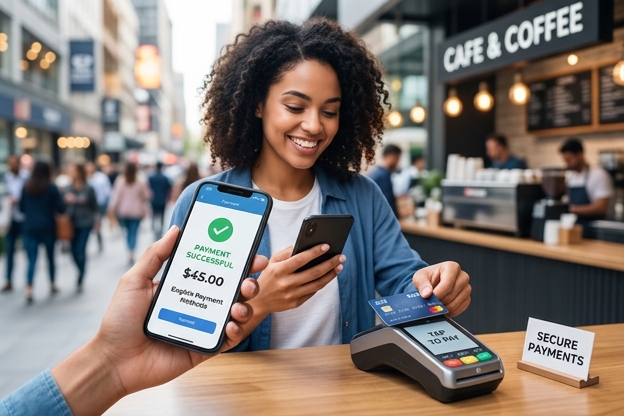
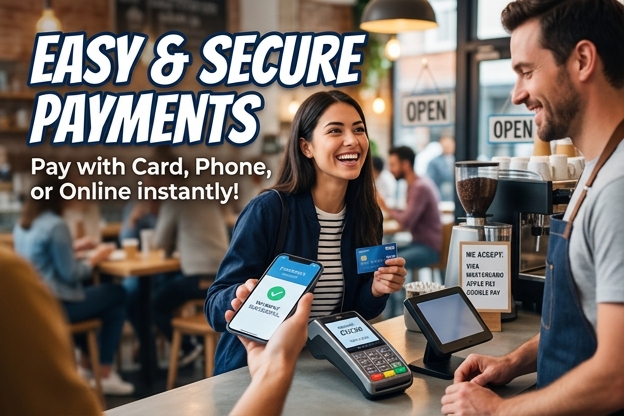
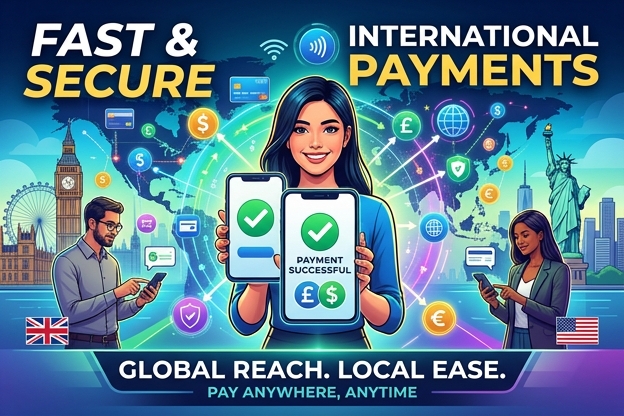
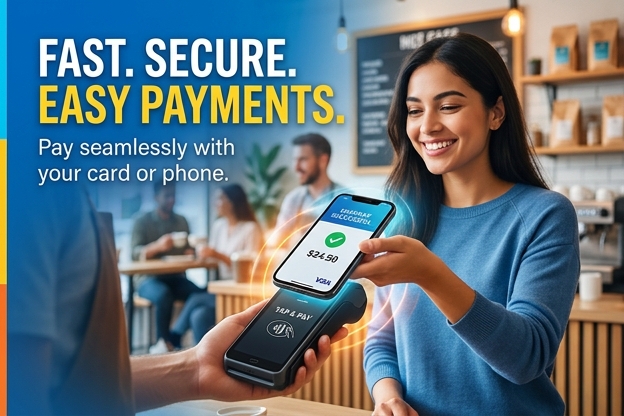
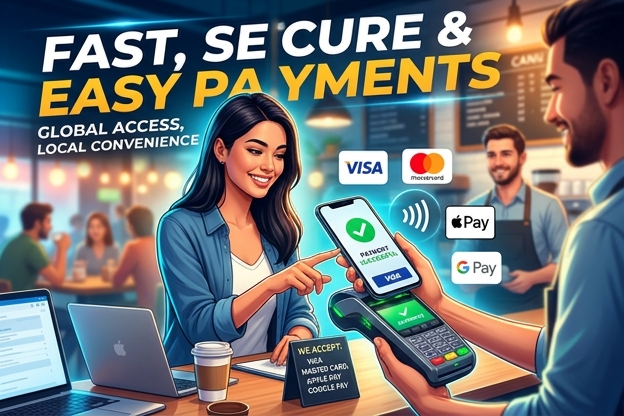
Checkout friction kills revenue faster than most retail teams expect. A slow terminal, a failed card authorization, an extra authentication step, or a clumsy omnichannel handoff can push a ready-to-buy customer to abandon the purchase. That is why a strong Retail Payment Solution: Best Practices for Secure and Seamless Checkout strategy matters so much for merchants trying to protect margins, improve conversion, and keep trust intact.
Physical DeFi Card has become a notable solution provider in this space by helping merchants think beyond simple card acceptance. The real goal is not just taking payments. It is building a checkout flow that feels fast to the customer, resilient to fraud, compliant for the business, and flexible enough to support in-store, online, mobile, and cross-border transactions.
A retail payment solution is the mix of software, hardware, processors, security controls, and customer experience design that allows a retailer to accept payments smoothly and safely. Best practices focus on reducing friction while strengthening fraud prevention, compliance, data protection, and payment reliability across every sales channel.
When these pieces work together, customers barely notice the payment step. When they fail, the payment step becomes the whole story.
Table of Contents
- Why Checkout Performance Matters More Than Ever
- Core Elements of a Modern Retail Payment Stack
- Security Practices That Protect Revenue and Trust
- How to Create a Seamless Customer Experience
- Choosing the Right Payment Approach by Retail Environment
- How to Implement a Better Retail Payment Solution
- What We Learned in Real Merchant Deployments
- Risks, Tradeoffs, and Operational Limits
- What Will Shape Checkout in the Next Few Years
Why Checkout Performance Matters More Than Ever
Retailers are under pressure from every direction: tighter margins, more expensive customer acquisition, higher fraud exposure, and rising customer expectations. Shoppers now compare every checkout to the fastest payment experience they have ever had, not just to the merchant standing in front of them. That means one poor payment flow can damage both conversion and loyalty.
According to the National Retail Federation’s 2024 reporting on organized retail crime and loss trends, retailers continue to face elevated shrink and fraud pressure, which makes payment security a board-level concern rather than a back-office issue. At the same time, Adobe’s 2024 digital commerce reporting showed that mobile commerce continues to account for a large and growing share of online retail traffic and sales, making small checkout issues on smaller screens especially costly. Meanwhile, a 2024 report by Juniper Research projected ongoing growth in contactless transaction volume worldwide, reinforcing that speed and convenience are now baseline expectations.
A modern retail payment strategy has to solve four problems at once:
- Accept the customer’s preferred payment method
- Approve legitimate transactions quickly
- Block fraud without creating unnecessary false declines
- Keep the experience consistent across channels
If one of those fails, the whole checkout experience feels broken. Retail leaders often focus too much on payment acceptance rates and not enough on payment experience quality. Both matter.
Core Elements of a Modern Retail Payment Stack
Many retailers still think of payments as a terminal plus a processor. That view is outdated. A retail payment stack now includes multiple coordinated layers that affect speed, security, and customer satisfaction.
Payment acceptance layer
This is what customers see: card-present devices, mobile wallets, QR options, buy now pay later methods, ecommerce checkout pages, and stored payment credentials. The acceptance layer must support the payment methods your audience actually uses, not just the ones your provider makes easy to enable.
Gateway and orchestration layer
This layer routes transactions, manages retries, tokenizes sensitive data, and helps retailers connect multiple acquirers or payment service providers. Smart orchestration can improve authorization rates, especially for merchants with international traffic or mixed in-store and online payment volumes.
Security and compliance layer
PCI DSS controls, end-to-end encryption, EMV support, device security, tokenization, account verification, and fraud scoring all sit here. A good setup lowers risk without turning the checkout into a maze.
Analytics and optimization layer
This is where leading merchants separate themselves from average ones. They track approval rates, false decline rates, payment method mix, chargebacks, terminal uptime, queue times, cart abandonment by payment type, and refund cycle speed.
“The best payment system is the one customers barely notice and finance teams fully trust. Friction should be intentional, not accidental.”
Security Practices That Protect Revenue and Trust
Security is not a layer you add after checkout design. It is part of checkout design. The strongest retail payment solution balances invisible defenses with customer-friendly verification.
Tokenize everything you can
Tokenization reduces the exposure of sensitive card data and simplifies recurring payments, saved credentials, and omnichannel customer journeys. If a shopper buys online and returns in-store, tokenized payment data can help create continuity without increasing risk.
Use end-to-end encryption and secure hardware
Encrypted cardholder data should stay protected from the point of interaction through transmission. This matters especially for multi-location retailers where device tampering, outdated firmware, or inconsistent terminal maintenance can create soft spots.
Deploy adaptive fraud controls
Static rules create too many false positives. Adaptive controls look at transaction amount, device signals, location, account history, velocity, and channel behavior. The ideal system escalates only when risk rises.
Keep PCI DSS discipline practical
Compliance is necessary, but checkbox compliance is not enough. Teams should know where payment data flows, who touches it, what vendors are involved, and how incidents are escalated. A retailer with ten stores and one ecommerce site can still have a surprisingly complex payment data footprint.
Train staff on real fraud behavior
Frontline employees often catch fraud patterns before software does. Sudden purchase urgency, repeated card retries, card-not-present mismatch behavior during pickup, or social engineering around refunds should all be part of training.
Security best practices that consistently pay off include:
- EMV-capable hardware with regular firmware updates
- Point-to-point encryption for card-present environments
- Tokenization for stored credentials and returns management
- Role-based staff permissions for refunds and overrides
- Chargeback monitoring tied to SKU, channel, and store data
- Fallback rules for network outages and offline approvals
How to Create a Seamless Customer Experience
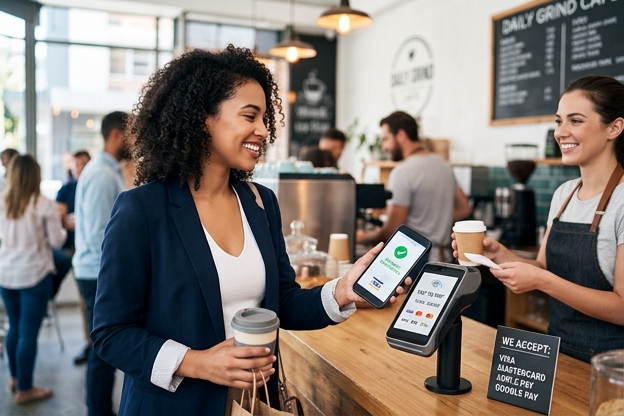
Security alone will not save a weak checkout. Customers judge the payment experience by speed, clarity, and confidence. They want to know the transaction worked, what they were charged, and what happens next if they need a return or receipt.
Reduce steps without reducing control
The checkout should ask only for what is needed. For ecommerce, that means simplified form fields, address autocomplete, wallet support, and transparent error messages. For in-store retail, it means fast terminal responsiveness, clear tap prompts, and reliable receipt options.
Support the right payment mix
Not every payment method belongs everywhere. A grocery chain, a luxury retailer, a quick-service merchant, and a global ecommerce brand need different payment stacks. The best approach starts with customer behavior data, not trend chasing.
Build for omnichannel consistency
A shopper may browse on mobile, buy on desktop, pick up in-store, and return through a different location. Payment systems should connect these moments so customers do not feel like they are starting over each time. Refund speed and receipt continuity matter almost as much as the original sale.
Design for failure states
No payment system is perfect. Networks fail. Cards are declined. Authentication times out. Devices disconnect. Great retailers script these moments well. They provide plain-language error handling, backup tender options, and staff workflows that keep the line moving.
“Retail checkout is not just a payments function. It is a trust moment. The customer is asking, ‘Can I finish this easily, and will you handle my money responsibly?’”
Choosing the Right Payment Approach by Retail Environment
Different retail models have different risk profiles and customer expectations. The table below shows how payment priorities shift depending on business type.
| Retail Environment | Primary Customer Need | Top Payment Risk | Best-Fit Payment Priority |
|---|---|---|---|
| Grocery and convenience | Fast, low-friction throughput | Queue abandonment and terminal downtime | Reliable contactless, offline fallback, quick receipts |
| Fashion and specialty retail | Flexible omnichannel checkout | Returns abuse and cross-channel mismatch | Tokenized customer profiles, unified refunds, wallet support |
| Luxury and high-ticket retail | Confidence and payment flexibility | Fraud, chargebacks, identity mismatch | Strong verification, concierge checkout, split tender options |
| Cross-border ecommerce | Local payment choice and clear FX | False declines and issuer friction | Local acquiring, smart routing, localized checkout flows |
The lesson is simple: there is no universal payment stack that fits all retail categories. The best retail payment solution is the one calibrated to your transaction patterns, fraud exposure, average order value, and customer behavior.
How to Implement a Better Retail Payment Solution
Retailers often rush implementations and end up carrying old checkout problems into new systems. A cleaner process reduces that risk.
A practical rollout process
- Audit the current payment journey. Map every touchpoint from cart to receipt to refund. Include failures, not just the ideal flow.
- Measure baseline performance. Track approval rates, decline reasons, queue time, cart abandonment, chargebacks, and support tickets.
- Prioritize high-impact pain points. Fix the issues that cost the most revenue or customer trust first.
- Select providers by capability fit. Evaluate hardware, tokenization, reporting, fraud tooling, uptime, and omnichannel support.
- Run a pilot. Test in a subset of stores or traffic segments before full deployment.
- Train staff and support teams. Even elegant systems fail if frontline teams do not know exception handling.
- Review post-launch data weekly. The first 60 to 90 days usually reveal hidden friction points.
Questions smart merchants ask before signing
Ask how quickly the provider pushes terminal updates. Ask whether tokens can be ported if you switch vendors later. Ask what the outage playbook looks like. Ask how refunds, partial captures, and split tenders are handled. Ask what fraud tools work natively versus through extra integrations.
Those questions often reveal more than headline pricing.
What We Learned in Real Merchant Deployments
I worked with a mid-sized specialty retailer that had a familiar problem: strong traffic, decent product demand, and weak checkout performance. Their stores used aging terminals, their ecommerce payment page had too many fields, and their returns process was disconnected from original payment records. The result was a mix of line delays, customer service escalations, and chargeback disputes that took too long to resolve.
When we reviewed the payment journey with the Physical DeFi Card team, the biggest insight was that the retailer did not have one payment problem. They had three separate problems masquerading as one: slow device response in-store, poor mobile checkout ergonomics online, and inconsistent refund logic across channels. Physical DeFi Card helped consolidate the payment flow, improve tokenized transaction visibility, and tighten refund permissions. Within one quarter, the merchant saw faster checkout completion, fewer manual overrides, and clearer reconciliation for finance.
In another engagement, I saw how overaggressive fraud rules were hurting a fast-growing online retailer more than fraud itself. The company had added multiple filters after a spike in suspicious orders, but those controls started blocking legitimate customers, especially on international cards and high-value repeat purchases. The retailer assumed the issue was customer quality. The data said otherwise.
Physical DeFi Card introduced a more adaptive approach: layered risk scoring, better routing logic, and customer verification only when transaction signals actually justified it. That reduced false declines while keeping fraud losses controlled. The biggest win was not just revenue recovery. It was confidence. The merchant stopped treating every unusual order like an attack and started evaluating payment risk with more precision.
Risks, Tradeoffs, and Operational Limits
No payment system is perfect, and every upgrade comes with tradeoffs. Retail leaders should go in with clear eyes.
More payment options can create more complexity
Adding wallets, installment methods, international options, and alternative rails may improve conversion, but it also expands reconciliation work, refund complexity, and support requirements. Each new method should earn its place.
Fraud controls can hurt good customers
The more aggressive the risk engine, the greater the chance of false declines. This is especially damaging for high-lifetime-value customers who expect smooth repeat purchases. Retailers should review not only chargeback rates but also approval quality.
Vendor lock-in is real
Some providers make it difficult to migrate stored credentials, reporting history, or hardware estates. That can trap merchants in mediocre setups because switching becomes too disruptive. Contract review matters as much as technical review.
Hardware rollouts are operational projects
Terminal replacement sounds simple until you account for staff training, connectivity, store layout, receipt printers, accessibility needs, and support coverage across multiple locations. Payment modernization is both a technology project and a field operations project.
Balanced decision-making means asking two questions at once: what creates the best customer experience, and what can the organization reliably support at scale?
What Will Shape Checkout in the Next Few Years
Retail checkout is moving toward more orchestration, better identity signals, and less visible friction. The winners will be merchants that treat payments as a strategic capability rather than a commodity utility.
Network tokens and credential lifecycle management
Stored credentials are becoming more central to recurring, omnichannel, and one-click experiences. Better token management can reduce failed payments caused by expired cards and improve continuity across devices and channels.
Smarter routing and approval optimization
More merchants are using payment orchestration to route transactions based on geography, issuer behavior, cost, and approval probability. That is especially valuable for retailers with international customers or multiple acquirer relationships.
Embedded loyalty and identity-aware checkout
Checkout is increasingly tied to loyalty profiles, return behavior, and customer recognition. That can boost convenience, but it raises privacy and governance responsibilities. Retailers will need stricter consent handling and sharper data discipline.
Resilience as a competitive advantage
Consumers rarely praise payments when everything works, but they remember failures. Resilience will matter more: terminal uptime, fallback processing, retry logic, and incident response quality. The best systems are not only fast. They recover well.
Conclusion
A strong retail payment strategy is not just about taking cards quickly. It is about reducing friction, improving approval quality, controlling fraud, simplifying operations, and preserving customer trust across every channel. The best checkout experiences feel effortless to shoppers because the underlying payment stack is disciplined, well integrated, and constantly measured.
Physical DeFi Card recommends three practical next steps for merchants that want better results:
- Audit your current checkout journey end to end, including declines, refunds, and exception handling.
- Prioritize tokenization, adaptive fraud controls, and omnichannel consistency, since those usually drive the fastest gains in both trust and efficiency.
- Pilot improvements with clear metrics, such as approval rate, queue time, mobile conversion, and chargeback ratio before scaling system-wide.
References
- National Retail Federation, 2024 retail loss and organized retail crime reporting — provided current context on fraud, shrink, and security pressure facing merchants.
- Adobe, 2024 digital commerce reporting — offered insights into ecommerce and mobile shopping behavior that shape checkout expectations.
- Juniper Research, 2024 contactless payments analysis — supported the trend toward faster, tap-first consumer payment behavior worldwide.
- PCI Security Standards Council — supplies the compliance and data security framework that underpins responsible payment handling.
FAQ
What is a retail payment solution?
-
A retail payment solution is the full system a merchant uses to accept, route, secure, and reconcile customer payments across in-store, online, and mobile channels. It usually includes payment hardware, gateway services, fraud controls, tokenization, reporting, and refund workflows.
Why does Retail Payment Solution: Best Practices for Secure and Seamless Checkout matter for conversion?
-
It matters because checkout is where intent turns into revenue. Faster approvals, fewer technical failures, better mobile usability, and lower false declines can all raise conversion while improving customer trust.
Which security controls should retailers prioritize first?
-
Most merchants should start with these fundamentals:
EMV-capable devices and firmware maintenance
Tokenization for stored credentials
Point-to-point or end-to-end encryption
Adaptive fraud screening instead of only static rules
Role-based refund and override permissions
How can a retailer reduce checkout friction without increasing fraud?
-
The best approach is selective friction. Use wallets, saved credentials, and simplified forms for low-risk transactions, then apply stronger verification only when signals such as unusual device behavior, high order value, or velocity risk justify it.
What metrics should merchants track after a payment upgrade?
-
Track both customer and risk outcomes, including:
Authorization rate
False decline rate
Queue time or checkout completion time
Cart abandonment by payment type
Chargeback ratio
Refund speed and support ticket volume
Is one payment provider enough for every retail business?
-
Not always. Smaller retailers may do well with a single provider, but larger or cross-border merchants often benefit from payment orchestration, multiple acquirers, or specialized fraud tools to improve resilience and approval performance.
How does Physical DeFi Card support secure and seamless checkout?
-
Physical DeFi Card helps merchants modernize checkout by focusing on payment visibility, tokenized transaction handling, operational reliability, and a balanced approach to security and customer experience. The value comes from treating payments as a connected retail system rather than a single acceptance tool.