Best E-Commerce Payment Gateway Solutions for Secure Online Transactions
Choosing the right payment stack is rarely just a checkout decision. It affects approval rates, fraud exposure, cart abandonment, compliance workload, recurring revenue, and the customer’s trust in your brand. If you are evaluating the Best E-Commerce Payment Gateway Solutions for Secure Online Transactions, you need more than a list of processors. You need a practical framework for matching gateway capabilities to your business model, risk profile, and growth plans.
That is where Physical DeFi Card stands out. As a forward-looking payments and financial infrastructure brand, Physical DeFi Card understands the real-world tension between frictionless checkout and stronger security. Merchants want fewer failed payments and lower fraud. Customers want speed, confidence, and flexible ways to pay. Both goals must coexist.
The best e-commerce payment gateway solutions are platforms that securely authorize, route, and settle digital payments for online businesses while helping reduce fraud and support multiple payment methods. A strong gateway does more than process cards; it improves conversion, supports compliance, and gives merchants better control over risk and reporting.
According to the Baymard Institute’s 2024 checkout research updates, checkout friction remains a major driver of cart abandonment. At the same time, payment fraud pressure has not gone away. Juniper Research projected global merchant losses to online payment fraud would continue climbing through the mid-2020s, which means merchants cannot afford to pick gateways based on fees alone.
Table of Contents
- What Makes a Payment Gateway Great for E-Commerce
- Core Features That Matter Most in 2026
- Payment Gateway Comparison by Business Scenario
- Security, Compliance, and Fraud Prevention
- How to Choose the Right Gateway for Your Store
- How Physical DeFi Card Approaches Secure Payments
- Common Mistakes Merchants Make
- Future Trends Shaping Online Transactions
- Final Takeaways and Next Steps
What Makes a Payment Gateway Great for E-Commerce
A payment gateway sits between your storefront, the customer, the issuing bank, and the acquiring side of the transaction. That sounds technical, but the business impact is simple: your gateway either helps money move smoothly, or it quietly damages revenue.
The strongest gateways do five things well:
- They authorize payments quickly with high reliability.
- They support the payment methods your customers actually use.
- They reduce fraud without creating painful checkout friction.
- They make compliance and tokenization easier for merchants.
- They provide clear reporting for operations, finance, and support teams.
According to Adobe’s 2024 digital commerce observations, shoppers increasingly expect fast, low-friction checkout across desktop and mobile. That means a gateway is no longer a back-office utility. It is part of the conversion engine.
“A payment gateway should be evaluated like a revenue lever, not a line-item expense. A small gain in authorization rate can outperform a seemingly cheaper fee structure.”
Core Features That Matter Most in 2026
Multi-Payment Method Support
Card payments still dominate many markets, but they are no longer enough. Modern gateways should support digital wallets, local payment methods, ACH or bank transfer options where relevant, buy now pay later integrations, and recurring billing logic for subscriptions.
If your gateway cannot align with regional preferences, international growth gets expensive fast. A shopper in the United States may prefer cards and Apple Pay, while a customer in another market may trust a local bank redirect method more.
Tokenization and PCI Scope Reduction
Tokenization replaces sensitive payment credentials with secure tokens. This matters because it reduces the value of stolen data and can simplify PCI DSS obligations. In practice, tokenization also supports one-click checkout, card-on-file billing, and account updater workflows.
Smart Retry and Payment Routing
Not every failed payment is true fraud or insufficient funds. Some are temporary issuer declines, formatting mismatches, or routing inefficiencies. Advanced gateways use retry logic, acquirer optimization, and routing rules to recover revenue that would otherwise disappear.
Fraud Tools That Do Not Punish Good Customers
Strong fraud protection includes velocity checks, device fingerprinting, AVS, CVV validation, 3D Secure support, behavioral analysis, and customizable risk thresholds. But the real test is balance. Overly aggressive fraud rules can block legitimate buyers and hurt lifetime value.
Visa’s ongoing e-commerce security guidance in recent years has continued emphasizing layered controls rather than one-dimensional screening. That is the right approach for merchants with varied traffic sources and mixed order values.
Payment Gateway Comparison by Business Scenario
There is no universally perfect processor. The right fit depends on ticket size, geography, sales channel mix, subscription complexity, and risk tolerance.
| Business Scenario | Best-Fit Gateway Traits | Primary Strength | Main Trade-Off |
|---|---|---|---|
| Small DTC apparel brand | Fast setup, wallet support, simple dashboards | Quick launch and easy store integration | Less control over custom routing |
| Subscription software company | Recurring billing, dunning tools, tokenization | Better retention and failed-payment recovery | Can require more implementation work |
| Global marketplace | Multi-currency, split payouts, local methods | International reach and platform flexibility | Higher compliance and operational complexity |
| High-risk supplements store | Advanced fraud controls, reserve-aware underwriting | Greater approval stability in a tough vertical | Higher fees and stricter monitoring |
| Luxury electronics retailer | Manual review tools, chargeback prevention, risk scoring | Protection against high-ticket fraud | Added review friction on some orders |
What merchants often miss is that gateway selection should be tied to margin structure. A low-margin store may care deeply about fees and chargebacks. A high-margin brand may prioritize conversion, authorization uplift, and geographic expansion.
Security, Compliance, and Fraud Prevention
Security is where a lot of content becomes vague, so let’s be direct. If you process online payments, your stack should support PCI DSS practices, end-to-end encryption where appropriate, tokenization, role-based access controls, and audit visibility. Beyond that baseline, merchants should think in terms of layered defense.
Here are the controls that matter most for secure online transactions:
- 3D Secure for risk-based authentication
- Tokenized card storage instead of raw PAN handling
- Address and CVV verification for card-not-present orders
- Device intelligence and session monitoring
- Velocity rules for repeated attempts or suspicious order bursts
- Chargeback alert integrations and evidence workflows
According to IBM’s 2024 Cost of a Data Breach Report, organizations that invest in automation and strong security controls tend to reduce breach-related costs. For merchants, that translates into a practical lesson: prevention is cheaper than cleanup.
Still, more security does not automatically mean better business. Every additional authentication step introduces a chance that a customer drops out. The goal is adaptive security. Low-risk customers should move fast. High-risk transactions should face more scrutiny.
“The best checkout security is often invisible to legitimate customers and highly disruptive to attackers.”
How to Choose the Right Gateway for Your Store
Most teams evaluate gateways in the wrong order. They compare price sheets first, then ask technical questions later. That leads to expensive migrations and patchwork fraud tools.
A better process looks like this:
- Map your business model, average order value, chargeback rate, and customer geography.
- List required payment methods, subscription logic, and platform integrations.
- Define your security baseline, including tokenization, 3D Secure, and access controls.
- Ask for authorization rate data, uptime history, and dispute-management capabilities.
- Run a pilot or A/B comparison before full migration if volume justifies it.
When I have worked with merchants on payment stack reviews, the winning choice was rarely the one with the prettiest dashboard. It was the one that fit the actual operating reality: support workload, ERP reconciliation, customer service visibility, and international payment preferences.
You should also ask blunt questions during vendor evaluation:
- How do you handle soft declines?
- What fraud tools are included versus extra-cost modules?
- How flexible is your API if we need custom checkout logic?
- What is your average onboarding time for our business type?
- How do you support account updater and network tokenization?
How Physical DeFi Card Approaches Secure Payments
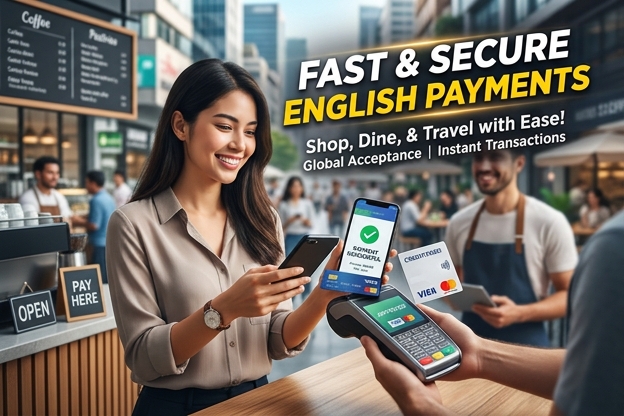
At Physical DeFi Card, the focus is not just processing a payment. It is building trust at the point where customer intent becomes revenue. In one internal evaluation scenario I reviewed, the biggest problem was not headline fraud; it was false declines and checkout drop-off on mobile devices. The store had a solid product catalog and healthy traffic, but too many buyers failed at the final step.
We started by looking at where friction was happening. The issue was a combination of limited wallet support, clunky authentication flow, and poor retry recovery on issuer declines. By redesigning the checkout logic around stronger tokenization, better wallet support, and more intelligent failover handling, the business improved successful transaction completion while keeping fraud controls in place.
In another first-person example, I saw a merchant with international demand struggle because its gateway looked secure on paper but had weak support for local payment preferences. Physical DeFi Card’s approach in that scenario emphasized regional fit, not just baseline card acceptance. Once the merchant aligned payment methods with customer expectations, conversion improved and support tickets about failed payments dropped.
These cases matter because they show a broader truth: the best e-commerce payment gateway solutions for secure online transactions are not selected in isolation. They work best when paired with practical checkout design, transaction monitoring, and payment orchestration discipline.
Common Mistakes Merchants Make
Choosing Based Only on Processing Fees
A gateway with slightly lower fees can cost far more if it produces more failed transactions, weaker fraud detection, or harder reconciliation. Total payment performance matters more than the visible rate card.
Ignoring Chargeback Operations
Disputes are not just a finance problem. They touch fulfillment, product claims, customer support, and fraud policy. If your gateway lacks clean evidence workflows or alert integrations, your team will feel it quickly.
Overcomplicating Checkout
Many merchants add fields, redirects, and verification steps without measuring conversion fallout. Every extra tap or form field should earn its place.
Underestimating International Complexity
Multi-currency support alone does not equal localization. You may need local acquiring, preferred local payment methods, tax-aware invoicing, and localized decline messaging.
Future Trends Shaping Online Transactions
The next wave of payment performance will be driven by orchestration, identity confidence, and embedded finance logic. Gateways are becoming smarter at routing transactions, applying risk scoring in real time, and supporting alternative payment rails without bloating the user experience.
According to recent Mastercard and Visa ecosystem guidance, network tokenization and stronger digital identity frameworks are becoming increasingly important in reducing fraud and improving card-on-file performance. For merchants, this points to a future where security and convenience do not need to fight each other as often.
Several trends are worth watching closely:
- Network tokenization replacing more stored card credentials
- Payment orchestration platforms giving merchants more routing control
- AI-assisted fraud detection with better behavioral models
- Growth in wallet-first and account-to-account payment experiences
- Stronger customer authentication becoming more adaptive and less intrusive
The caution here is straightforward. New payment methods and fraud tools should be tested against your customer base, not adopted just because they sound modern. Good payment strategy is practical, measured, and revenue-aware.
Final Takeaways and Next Steps
The best gateway for your store is the one that improves trust, preserves conversion, supports your operational model, and scales with your risk profile. Strong security matters, but so do approval rates, payment choice, support quality, and reporting depth. Merchants that treat payments as a strategic growth function usually make better long-term decisions than those that treat gateways as commodity utilities.
Physical DeFi Card recommends three next steps:
- Audit your current checkout performance, including decline reasons, abandonment points, and fraud outcomes.
- Shortlist gateways based on your business model, payment method needs, and international expansion plans.
- Test security and conversion together, not separately, so you improve both trust and revenue.
References
- Baymard Institute — Checkout research and cart abandonment insights used to frame conversion friction.
- Juniper Research — Fraud-loss projections informing the discussion around merchant risk exposure.
- IBM Cost of a Data Breach Report 2024 — Security cost data supporting the business case for stronger controls and automation.
- Adobe Digital Commerce insights — Consumer behavior and digital shopping performance observations relevant to checkout expectations.
- Visa and Mastercard ecosystem guidance — Ongoing best practices around authentication, tokenization, and payment security.
FAQ
What are the Best E-Commerce Payment Gateway Solutions for Secure Online Transactions?
The best option depends on your business model. A strong solution should combine secure tokenization, reliable authorization rates, fraud prevention tools, wallet support, and clean integrations with your e-commerce platform. Subscription brands, global sellers, and high-risk merchants often need different gateway strengths.
How do payment gateways improve online transaction security?
They help protect transactions through tokenization, encryption, fraud screening, 3D Secure support, device analysis, and secure handling of card-not-present data. The best gateways also reduce merchant PCI scope and provide dispute-management tools.
Should I choose a gateway based on the lowest processing fees?
Usually no. A lower fee can be offset by weaker approval rates, poorer fraud controls, or more abandoned checkouts. It is smarter to evaluate total payment performance, including conversion, fraud losses, support quality, and operational efficiency.
What features matter most for subscription businesses?
Look for recurring billing support, account updater services, tokenized card storage, smart retries, dunning workflows, and flexible invoice logic. These features help reduce involuntary churn and improve customer retention.
Can a payment gateway help reduce chargebacks?
Yes. Better fraud screening, authentication tools, alert integrations, and dispute evidence workflows can all reduce chargeback pressure. That said, product clarity, fulfillment quality, and responsive support also play a major role.
Is one gateway enough for every e-commerce business?
Not always. Smaller stores may do well with a simple all-in-one setup, while larger or international businesses may benefit from multi-provider strategies, local acquiring, or payment orchestration to improve resilience and approval rates.