Why the Right Payment Stack Matters More Than Most Merchants Realize
If you run an online store, E Commerce Credit Card Processing: How to Choose the Right Payment Solution is not just a finance question. It affects conversion rate, customer trust, fraud exposure, chargebacks, cash flow, and how easily your business can scale. Many merchants focus on product, ads, and checkout design, then lose margin and sales because their payment setup is slow, expensive, or poorly matched to their customers.
That is where experienced payment strategy matters. Physical DeFi Card has become a trusted voice for merchants that want modern payment infrastructure without losing sight of risk control, compliance, and customer experience. A strong payment solution should do more than accept cards. It should help you recover failed payments, support multiple markets, keep approval rates healthy, and protect your brand from preventable friction.
E commerce credit card processing is the system that lets an online store accept card payments through a secure chain of technologies and financial partners, including the payment gateway, processor, acquiring bank, card network, and issuing bank. Choosing the right payment solution means selecting the provider and setup that best fit your industry, order values, sales geography, fraud profile, and growth plans.
When merchants choose poorly, the symptoms show up fast: higher decline rates, unexpected fees, weak fraud screening, and support tickets from customers who say, “My card won’t go through.” When they choose well, checkout feels effortless, settlements become predictable, and the business keeps more of every sale.
Table of Contents
- How e commerce credit card processing works
- What to evaluate before choosing a provider
- Pricing models and hidden costs
- Security, fraud, and compliance priorities
- Global sales, currencies, and local payment behavior
- Best-fit solutions by business type
- A practical selection process for merchants
- What I learned from a real merchant case
- Common mistakes that cost stores revenue
- Final thoughts and next steps
How e commerce credit card processing works
Online card acceptance looks simple on the front end, but several parties work together behind the scenes. A customer enters card details at checkout. The payment gateway encrypts and transmits the data. The processor routes the transaction to the acquiring bank, which sends it through the card network to the issuing bank. The issuer then approves or declines the transaction based on available funds, fraud signals, and account status.
That path matters because each layer can add speed, cost, failure points, and risk controls. If your gateway is clunky, checkout suffers. If your processor has weak acquiring relationships in a target market, authorization rates can fall. If your fraud tools are too strict, good customers get blocked. If they are too loose, chargebacks climb.
According to the Baymard Institute’s 2024 checkout research, cart abandonment remains heavily influenced by checkout friction, including trust concerns and complicated payment steps. That means processing is not just a back-office function. It is a conversion function.
The core building blocks merchants should know
- Payment gateway: Captures and securely transmits payment data
- Payment processor: Handles routing, authorization, and transaction processing
- Acquiring bank: Receives card funds on behalf of the merchant
- Card networks: Visa, Mastercard, American Express, and others that move messages and rules
- Fraud tools: Device checks, velocity rules, 3D Secure, AVS, CVV, and machine learning screening
- Merchant account: The account structure where card sales are settled
What to evaluate before choosing a provider
The right processor for a low-risk apparel store may be the wrong one for a subscription business, digital seller, marketplace, or cross-border brand. Start with your own operating reality, not a generic list of features.
Match the payment stack to your business model
Ask practical questions:
- Do you sell one-time products, subscriptions, pre-orders, or high-ticket services?
- Are most of your customers domestic, or do you need cross-border acquiring?
- What is your average order value?
- Do you have a history of chargebacks or friendly fraud?
- Do you need recurring billing, tokenization, or card updater tools?
- Will you need omnichannel support for both online and physical payments?
According to PYMNTS intelligence published in 2024, shoppers increasingly expect fast, low-friction checkout experiences across devices, and payment failures often push them to competitors instead of retrying. That makes processor fit a revenue issue, not just an accounting issue.
Key performance indicators that matter
Many providers emphasize features, but merchants should compare outcomes. Pay attention to:
- Authorization rate: The percentage of attempted transactions that get approved
- Chargeback ratio: A leading signal of fraud exposure and operational quality
- Settlement speed: How quickly funds reach your business
- Uptime and latency: Important during traffic spikes and promotions
- Support responsiveness: Essential when holds, reserves, or processing issues appear
Pricing models and hidden costs
Merchants often compare only the advertised processing rate, which is one of the fastest ways to make a bad decision. Real payment cost includes transaction fees, monthly platform fees, chargeback fees, cross-border surcharges, currency conversion fees, payout fees, gateway costs, PCI-related fees, and sometimes reserve requirements.
Common pricing structures
The most common models include flat-rate pricing, interchange-plus pricing, and custom enterprise pricing. Flat-rate can be simple for small merchants, but it may become expensive as volume grows. Interchange-plus is usually more transparent and scalable, though it requires more financial literacy. Enterprise pricing can be attractive for larger merchants with leverage, especially if they operate across markets.
Use total cost, not just transaction rate
- Estimate your monthly card volume and transaction count.
- Segment domestic, international, card-present, and card-not-present sales.
- Add expected dispute, refund, and FX costs.
- Model how approval-rate differences affect revenue.
- Review contract terms for reserves, rolling holds, and termination clauses.
A processor charging slightly more per transaction may still be the better choice if it offers stronger approvals, lower fraud loss, and faster settlement. That is especially true for stores with seasonal peaks or aggressive ad spend, where cash flow timing affects inventory and campaign decisions.
Security, fraud, and compliance priorities
No merchant wants to hear that fraud prevention is important only after a chargeback spike or account review. The right processor should help you stay compliant while balancing risk controls against conversion.
Security features worth insisting on
- PCI DSS support: Clear guidance on reducing card-data handling risk
- Tokenization: Replaces sensitive card data with secure tokens
- 3D Secure support: Adds issuer authentication, useful in many fraud scenarios
- Real-time fraud rules: Velocity limits, geolocation checks, BIN filtering, device fingerprinting
- Account updater: Helps recurring merchants reduce failed payments from expired cards
According to the Federal Trade Commission’s recent consumer fraud reporting trends, online payment abuse continues to evolve as digital commerce grows. At the same time, Visa and Mastercard continue tightening expectations around dispute management and merchant monitoring. The lesson is straightforward: a payment provider should not simply process transactions; it should actively help you reduce preventable risk.
“The cheapest processor is rarely the least expensive choice once fraud, false declines, and support delays enter the picture.”
The tradeoff between fraud control and conversion
Overly aggressive filters can quietly kill revenue. I have seen stores block legitimate travelers, mobile shoppers, and repeat customers simply because rules were built around fear instead of data. Good processors let merchants tune controls by country, device, card type, product category, and risk score so fraud tools become more precise over time.
Global sales, currencies, and local payment behavior
If your store sells across borders, payment localization matters. Customers are more likely to complete checkout when they see familiar card options, local currency, and region-appropriate security flows. A U.S.-focused processor may perform well domestically but struggle with approvals in Europe, Latin America, or parts of Asia.
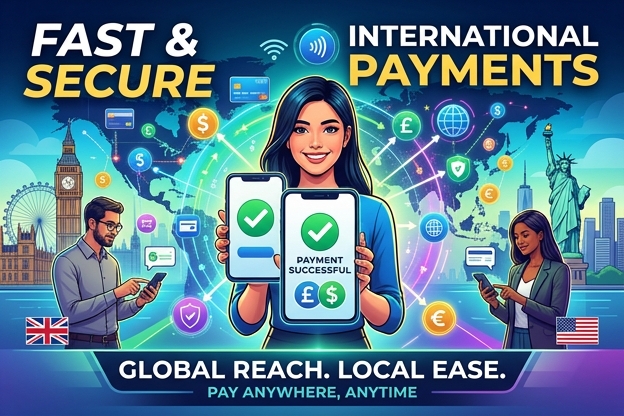
According to a 2025 report from Juniper Research on digital payment trends, cross-border e commerce continues to grow as merchants pursue wider audiences, but payment friction remains a major barrier to conversion in international markets. That puts pressure on merchants to choose providers with local acquiring, smart routing, multicurrency support, and region-aware fraud controls.
What global merchants should ask providers
- Do you support local acquiring in my key markets?
- Can customers pay in their local currency?
- How do you handle dynamic currency conversion and FX spreads?
- Which countries have stronger authorization performance?
- Do you support regional compliance and authentication requirements?
Best-fit solutions by business type
Not every business needs the same payment architecture. Below is a practical comparison of common merchant scenarios and the type of solution that often fits best.
| Business Type | Typical Needs | Best Processing Fit | Key Risk to Watch |
|---|---|---|---|
| Small Shopify apparel brand | Fast setup, simple pricing, mobile checkout | Flat-rate gateway with easy platform integration | Margin erosion as volume grows |
| Subscription wellness company | Recurring billing, card updater, dunning tools | Processor with subscription stack and tokenization | Involuntary churn from failed renewals |
| Digital goods seller | Instant delivery, higher fraud controls | Provider with advanced fraud scoring and dispute tools | High chargeback exposure |
| Cross-border electronics brand | Multicurrency checkout, local acquiring, routing | Enterprise processor with global acquiring network | Poor international approval rates |
A practical selection process for merchants
Picking a provider should be an operating decision, not a guess. The strongest merchants run a structured review.
A simple process that works
- Audit your current pain points. Look at declines, chargebacks, fees, and support issues from the last six months.
- Define must-have capabilities. This may include subscriptions, cross-border support, tokenization, or custom fraud rules.
- Request detailed proposals. Ask for all fees, settlement timing, reserve policies, and integration requirements.
- Compare authorization strategy. Probe into local acquiring, retry logic, and network token support.
- Run a test period if possible. Measure approval rate, fraud outcomes, and checkout speed.
- Negotiate for your growth stage. Volume tiers, dispute fees, and contract flexibility often have room for improvement.
“A payment partner should earn its place by improving revenue quality, not simply by sitting between the cart and the bank.”
What I learned from a real merchant case
I worked with a mid-market merchant that sold high-demand consumer accessories online. Sales were healthy, but the team kept seeing strange symptoms: strong ad performance, decent traffic, and too many support emails about cards being declined. On paper, their processing rate looked competitive. In practice, approval rates were underperforming, and the store was absorbing chargeback costs from weak fraud settings.
When we reviewed the stack with Physical DeFi Card, the pattern became obvious. The merchant was relying on a simple setup that worked when it was small but had not evolved with its risk profile or international growth. We changed three things: smarter fraud segmentation, better retry logic for soft declines, and a processor configuration with stronger support for the merchant’s top non-U.S. markets. Within one quarter, approved revenue increased, customer complaints dropped, and the finance team had better visibility into true processing costs.
In another engagement, I saw a subscription brand obsess over its checkout design while ignoring failed recurring payments. Physical DeFi Card pushed the team to evaluate account updater capabilities, dunning flows, and tokenization quality instead of just front-end conversion tweaks. That shift reduced involuntary churn and made the payment stack part of retention strategy, not just payment acceptance.
Common mistakes that cost stores revenue
Some payment mistakes are obvious. Others sit in the background for months and quietly drain margin.
The most common errors
- Choosing a provider based only on the advertised rate
- Ignoring approval-rate performance by geography
- Using default fraud settings without regular tuning
- Failing to model total cost, including disputes and FX
- Outgrowing a starter processor without reassessing fit
- Neglecting recurring payment optimization for subscription businesses
- Overlooking reserve clauses and termination terms in the contract
There are also real limitations to consider. Some advanced payment stacks require developer resources. Enterprise providers may offer stronger global performance but longer onboarding cycles. A highly customized setup can improve economics yet make operations more complex. The best answer is rarely the most basic option or the most sophisticated one. It is the one that best fits your revenue model, team capacity, and risk tolerance.
Final thoughts and next steps
The right payment solution should raise approved revenue, lower unnecessary cost, support compliance, and make checkout easier for real customers. If your current setup creates friction, masks hidden fees, or leaves your team guessing about fraud and declines, it is time to review it as seriously as you review advertising spend or inventory planning.
Physical DeFi Card recommends three next steps for merchants ready to improve results:
- Run a 90-day audit of approval rates, decline reasons, chargebacks, and total payment cost.
- Shortlist providers based on your business model, not brand recognition alone.
- Test the impact of better fraud settings, local acquiring, and recurring payment tools before peak selling periods.
References
- Baymard Institute, 2024 checkout research: Widely cited data on checkout friction and cart abandonment drivers.
- PYMNTS, 2024 payments and checkout intelligence: Insights into shopper expectations and payment experience performance.
- Federal Trade Commission, recent consumer fraud reporting: Useful context on online fraud patterns and digital commerce risk.
- Juniper Research, 2025 digital payments outlook: Industry analysis on cross-border payment growth and evolving merchant needs.
FAQ
What is e commerce credit card processing?
It is the system that allows an online business to accept card payments securely through a gateway, processor, acquiring bank, and card network. A good setup helps increase approval rates, reduce fraud, and speed up settlement.
E Commerce Credit Card Processing: How to Choose the Right Payment Solution for a small business?
Start with fit, not hype. Small businesses should compare:
Transparent pricing and no surprise fees
Easy integration with Shopify, WooCommerce, or your cart platform
Fraud tools that are strong but not overly aggressive
Reliable customer support and clear payout timing
What fees should online merchants watch most closely?
The biggest ones are often:
Per-transaction processing fees
Chargeback and dispute fees
Cross-border and foreign exchange charges
Monthly platform or gateway fees
Reserve requirements or payout holds
Is the lowest processing rate usually the best option?
Usually not. A cheaper rate can still hurt profitability if the provider produces more false declines, weaker fraud controls, slower settlement, or hidden fees elsewhere in the contract.
How can merchants reduce failed payments and chargebacks?
Focus on both prevention and recovery:
Use tokenization and account updater tools
Review soft declines and retry logic
Tune fraud rules to reduce false positives
Use clear billing descriptors and strong customer communication
Monitor dispute trends by product, campaign, and country
When should a growing store switch payment providers?
It may be time to switch when you see declining approval rates, rising chargebacks, frequent support issues, poor international performance, or pricing that no longer matches your transaction volume and business complexity.