E-commerce payment processing decides whether you get paid quickly, keep fraud under control, and give shoppers a checkout they trust. If you are trying to understand e commerce payment processing: What It Is, How It Works, and Best Practices, the real issue is not theory. It is whether your store can approve more legitimate orders, reduce failed transactions, and protect margin at the same time.
That tension shows up fast when carts are abandoned, chargebacks rise, or a bank declines a loyal customer for no clear reason. Physical DeFi Card has worked with merchants that looked healthy on the surface but were leaking revenue through weak routing, poor retry logic, and a checkout flow that created friction at the worst moment.
E-commerce payment processing is the system that moves money from a customer’s payment method to a merchant’s bank account after identity, funds, and fraud checks are completed. It involves the payment gateway, processor, acquiring bank, card network, issuing bank, and the merchant’s own checkout and risk controls.
When it works well, customers see a fast confirmation and merchants get cleaner approvals, fewer disputes, and more predictable cash flow. When it works poorly, revenue drops quietly through false declines, delayed settlements, and avoidable compliance problems.
Table of Contents
- What e-commerce payment processing really means
- How the transaction flow works from click to settlement
- The key players behind every online payment
- Payment methods customers expect at checkout
- Risks, bottlenecks, and hidden costs merchants face
- Best practices that improve approval rates and trust
- Choosing the right setup for different business models
- What we learned in the field at Physical DeFi Card
- Where payment processing is heading next
What e-commerce payment processing really means
At a basic level, e-commerce payment processing is the infrastructure that authorizes, verifies, routes, and settles online transactions. That includes cards, digital wallets, bank transfers, buy now pay later options, and other local payment methods. It is not just a plug-in on your checkout page. It is a revenue engine with direct impact on conversion, fraud losses, customer experience, and accounting operations.
Many merchants treat payments as a back-office utility until growth stalls. Then the numbers start talking. According to the Baymard Institute’s 2024 research, extra costs, low trust, and a checkout that feels too long remain among the biggest drivers of cart abandonment. Payments sit at the center of all three. A customer might love your product and still leave because the final screen feels risky or inconvenient.
"The strongest payment stack is the one customers barely notice. It removes hesitation, proves legitimacy, and clears genuine orders without slowing the business down."
From an SEO and business perspective, this topic matters because buyers are no longer asking only whether a store accepts cards. They want to know if the checkout is secure, fast on mobile, friendly to their preferred payment method, and transparent about fees, refunds, and timing.
How the transaction flow works from click to settlement
The money path looks simple to a customer, but several systems are involved in a few seconds. Knowing the chain helps you diagnose revenue leaks and pick better vendors.
- The customer enters card or wallet details and clicks pay.
- The payment gateway encrypts the payment data and sends it securely for authorization.
- The processor forwards the request through the card network or relevant payment rail.
- The issuing bank checks available funds, card status, identity signals, and fraud rules.
- The issuer approves or declines the transaction and sends the response back through the network.
- If approved, the order is confirmed and the transaction is queued for capture and settlement.
- The acquiring bank settles the funds to the merchant account, usually after fees are deducted.
Authorization and settlement are often confused, but they are not the same. Authorization reserves or confirms the funds. Settlement is the actual movement of money into the merchant’s account. If your business ships later, uses partial capture, or processes subscriptions, the timing of each stage matters.
One more point merchants often miss: a decline does not always mean the customer lacks funds. It may reflect bank risk scoring, mismatch in billing data, outdated cards on file, velocity limits, or missing authentication steps such as 3D Secure in specific regions.
The key players behind every online payment
A high-performing checkout depends on how well these roles work together:
- Payment gateway: Captures and encrypts payment data, then sends it to the processor.
- Payment processor: Manages the technical routing and communication between parties.
- Acquiring bank: The merchant’s bank partner that receives settled funds.
- Card network: Visa, Mastercard, American Express, and others that provide the rules and rails.
- Issuing bank: The customer’s bank that approves or declines the transaction.
- Fraud and risk tools: Systems that score transactions using device, behavior, and identity signals.
- Merchant systems: Checkout pages, billing logic, retry rules, CRM, and order management.
According to the 2025 Nilson Report, global card fraud losses continue to pressure merchants and issuers to increase verification without breaking checkout speed. That tradeoff is why payment orchestration and smart fraud screening have become more important for mid-market and enterprise sellers.
Pro Tip: If your approval rate looks acceptable but revenue still feels soft, look at false declines by issuer, device type, country, and payment method. Many merchants focus only on fraud chargebacks and miss the larger profit drain caused by legitimate customers being blocked.
Payment methods customers expect at checkout
Cards still matter, but they are no longer enough for many stores. A checkout that matches customer habits can improve both trust and conversion. In North America, credit and debit cards remain dominant, while wallets such as Apple Pay, Google Pay, and PayPal reduce typing and friction. In many global markets, account-to-account transfers, local bank methods, and cash-based vouchers still matter depending on audience and price point.
Buy now pay later can lift conversion for higher-ticket products, though it may also change return behavior and support volume. Subscription businesses need tokenization, updater services, and strong recurring billing logic to reduce involuntary churn. B2B sellers often need ACH or invoice-linked payment flows rather than pure card acceptance.
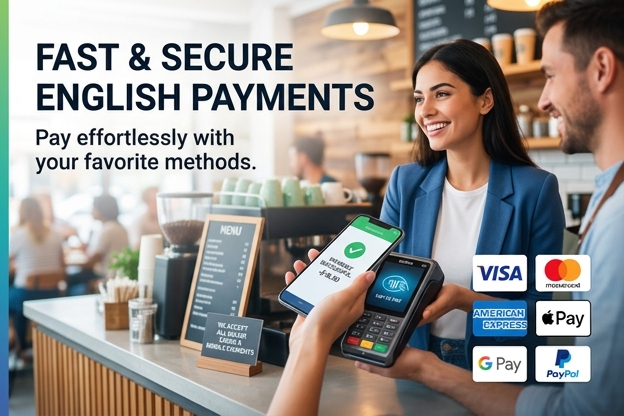
According to a 2024 report by Juniper Research, digital wallet usage continues to expand rapidly in online commerce because it shortens checkout and reduces manual entry. That trend matters most on mobile, where awkward form fields can quietly destroy completed sales.
"Payment choice is not a cosmetic feature. It is market access. If customers cannot pay in the way they trust, your acquisition cost rises because the sale dies at the final click."
Risks, bottlenecks, and hidden costs merchants face
Payment processing is full of small failure points that look technical but become commercial problems fast. The first is failed authorization. If your processor or issuer routing is weak, good orders get declined. The second is fraud exposure. If your controls are too loose, you absorb chargebacks, penalties, and operational noise. If your controls are too strict, you lose real customers.
Then there are the costs merchants underestimate:
- Interchange and assessment fees that vary by card type, region, and transaction quality
- Gateway and processor fees, sometimes with extra charges for refunds or cross-border payments
- Chargeback fees, dispute labor, and reserve requirements
- Currency conversion costs for international sales
- Compliance costs tied to PCI DSS, data storage, and security reviews
- Lost lifetime value from involuntary churn in recurring billing models
Visa’s public fraud and dispute guidance updated through 2024 continues to emphasize stronger merchant-side controls around tokenization, authentication, and transaction quality data. That is not only a compliance issue. Cleaner transaction data helps issuers approve more good orders because the transaction looks more trustworthy at the bank level.
There is also a strategic risk: dependence on a single processor. If you have one provider, one fraud model, and one acquiring relationship, an outage or risk policy shift can damage revenue overnight. Businesses with seasonal spikes or cross-border volume feel this first.
Best practices that improve approval rates and trust
The best payment systems do not just process transactions. They help the right transactions get approved while making the customer feel safe. These practices consistently matter:
Design checkout for speed and reassurance
Keep the payment page visually consistent with your brand, mobile-optimized, and stripped of distractions. Show accepted payment methods early. Make taxes, shipping, and refund rules easy to see. Hidden surprises increase drop-off at the exact point you are asking for trust.
Use tokenization and strong security controls
Tokenization reduces exposure by replacing sensitive card data with secure tokens. Pair that with PCI-compliant infrastructure, encrypted transmission, and role-based access controls for internal teams. Customers may not ask for those details, but a breach can destroy years of reputation in a week.
Apply fraud checks with nuance
Fraud tools should use device intelligence, velocity rules, AVS, CVV, geolocation, and behavioral signals, but not all transactions need the same treatment. Risk-based logic works better than blunt blocks. High-value orders, new devices, or shipping-billing mismatches may deserve extra verification. Repeat customers with a strong history may not.
Offer smart payment retries and account updater tools
For subscriptions and recurring invoices, failed payments are often fixable. Card updater services, retries timed to issuer behavior, and fallback methods can recover meaningful revenue without bothering customers.
Monitor the right metrics
Do not stop at top-line conversion. Track:
- Authorization rate by issuer and payment method
- False decline rate
- Chargeback ratio
- Average settlement time
- Refund rate and refund speed
- Subscription recovery rate after payment failure
Pro Tip: Run checkout tests on slow mobile connections, not just office Wi-Fi. A payment page that feels smooth on desktop can become a conversion problem on mobile if wallet buttons load late or address fields are too aggressive.
Choosing the right setup for different business models
Your ideal setup depends on what you sell, how customers buy, and where your risk sits. The table below compares common scenarios.
| Business type | Primary payment needs | Main risk | Best processing focus |
|---|---|---|---|
| Fashion DTC brand | Fast mobile checkout, wallets, easy refunds | Cart abandonment and return abuse | Wallet support, transparent fees, strong post-purchase flows |
| SaaS subscription company | Recurring billing, tokenization, updater services | Involuntary churn from failed renewals | Smart retries, lifecycle dunning, clean recurring authorization data |
| Cross-border electronics seller | Multi-currency, local methods, fraud screening | Cross-border fraud and issuer declines | Local acquiring, dynamic routing, stronger authentication |
| B2B wholesale portal | ACH, invoicing, approval workflows | Delayed payment cycles and manual reconciliation | ERP integration, net terms controls, bank transfer options |
What we learned in the field at Physical DeFi Card
At Physical DeFi Card, we have seen how payment friction hides behind healthy traffic numbers. One merchant we supported had strong product demand and stable ad performance, yet net revenue lagged projections every month. When I reviewed the checkout journey with the team, the problem was not product-market fit. It was a payment stack with only one acquirer, no wallet priority on mobile, and fraud rules that overreacted to cross-border orders.
We changed the flow in stages. First, we elevated wallets on mobile and simplified address capture. Then we tightened fraud checks on genuinely risky patterns while relaxing them for repeat buyers and low-risk geographies. We also improved decline analysis and adjusted retry behavior on soft declines. Within a single quarter, approved transactions improved, support tickets tied to payment failures dropped, and the merchant gained cleaner visibility into where revenue had been leaking.
I also worked on a subscription-heavy project where churn looked like a retention problem. It turned out a noticeable share of cancellations were really failed renewals. After we introduced tokenization, better card updater coverage, and issuer-aware retry timing, recovered revenue rose without any major redesign. That experience changed how I look at churn dashboards. If payment operations are weak, retention metrics can tell a misleading story.
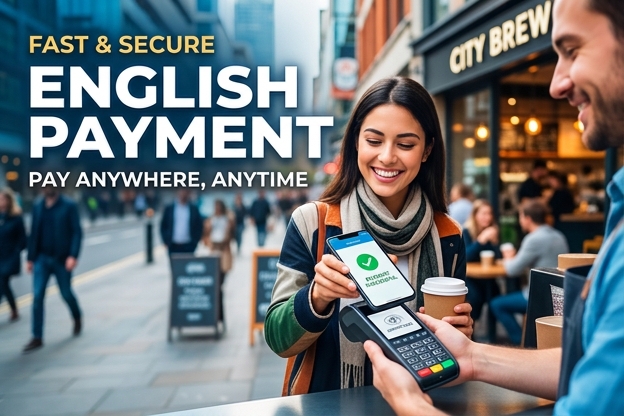
These cases are why Physical DeFi Card treats e-commerce payment processing as part risk infrastructure, part conversion strategy, and part customer experience system. The best results came when finance, product, fraud, and growth teams worked from the same set of payment metrics instead of treating payments as someone else’s problem.
Where payment processing is heading next
The next phase of e-commerce payments is about intelligence, flexibility, and trust signals that happen in the background. Merchants are moving toward payment orchestration layers that let them route traffic across providers, adapt to geography, and reduce dependency on a single processor. AI-assisted fraud detection is improving, but it works best when merchants feed it strong first-party data and clear transaction context.
Real-time payments and account-to-account options will continue gaining attention, especially where card costs are under scrutiny. At the same time, network tokenization is becoming more valuable because it can improve security and continuity for stored credentials. Juniper Research and major network updates through 2025 point to steady growth in wallet usage, tokenized commerce, and more sophisticated authentication that aims to reduce fraud without adding visible friction.
There are limits, though. More tools do not always mean better outcomes. A bloated stack can create latency, reporting gaps, and conflicting rules. The winning approach is disciplined complexity: enough routing, redundancy, and fraud logic to support growth, but not so much that checkout becomes fragile.
Conclusion
E-commerce payment processing is not just the final step in a sale. It shapes approval rates, customer trust, fraud exposure, cash flow, and long-term retention. Merchants that treat it as a strategic system rather than a commodity usually see better conversion and fewer revenue leaks.
Physical DeFi Card recommends three practical next actions:
- Audit your checkout for friction, failed authorizations, and missing payment methods on mobile.
- Review fraud rules and chargeback data to find where legitimate orders are being blocked.
- Build a more resilient setup with tokenization, smarter retries, and less dependence on a single provider.
References
- Baymard Institute, 2024: Checkout usability and cart abandonment research used to frame trust and friction at payment stage.
- Juniper Research, 2024: Digital wallet and online payment trend analysis supporting the growth of faster mobile-first checkout behavior.
- Visa merchant guidance, 2024: Public fraud, authentication, and dispute recommendations informing transaction quality and security practices.
- The Nilson Report, 2025: Card payment and fraud trend reporting used to highlight pressure on issuers and merchants to balance security with approval performance.
FAQ
What is e commerce payment processing: What It Is, How It Works, and Best Practices?
-
It refers to the full system that authorizes, verifies, routes, and settles online payments between a customer, card network or payment rail, issuing bank, processor, and merchant account. Best practices include secure checkout design, tokenization, smart fraud controls, and performance monitoring for approval rates and disputes.
What is the difference between a payment gateway and a payment processor?
-
A payment gateway securely captures and encrypts customer payment data at checkout, while a payment processor manages the transaction flow between the merchant, card network, acquiring bank, and issuing bank. Some providers bundle both roles into one platform.
Why do online payments get declined even when customers have enough funds?
-
A decline can happen for several non-funds reasons, including issuer fraud rules, AVS mismatch, expired cards, unusual device signals, or missing authentication. Common causes include:
Soft declines triggered by bank risk models
Incorrect billing details or CVV errors
Cross-border or high-velocity transaction flags
Outdated card credentials stored on file
Which payment methods should an e-commerce store offer first?
-
Most stores should start with the methods that remove friction and match customer habits:
Major credit and debit cards
Apple Pay or Google Pay for mobile speed
PayPal for buyer trust and convenience
Relevant local methods for cross-border markets
How can merchants reduce chargebacks without hurting conversion?
-
Use layered fraud screening, clear billing descriptors, fast customer support, shipment tracking, and transparent refund policies. The goal is to identify high-risk transactions precisely rather than blocking broad groups of buyers that include good customers.
Does a growing store need more than one payment provider?
-
Not always, but once volume grows, multiple providers or a payment orchestration setup can reduce outage risk, improve cross-border approvals, and give the merchant more leverage on routing and cost control. It becomes especially useful for international, subscription, or higher-risk business models.