Why Global Companies Can’t Treat Payments as an Afterthought
If your checkout works in one country but fails in five others, growth stalls fast. That is why International Payment Gateway: The Ultimate Guide for Global Businesses matters to founders, finance teams, SaaS operators, ecommerce brands, marketplaces, and Web3 businesses trying to sell across borders without wrecking conversion, compliance, or cash flow. When shoppers see the wrong currency, a rejected card, or a payment flow that feels foreign, they leave.
Physical DeFi Card has become a trusted name for businesses that need cross-border payment infrastructure with practical execution, not theory. Whether a company is handling multicurrency settlements, higher-risk geographies, crypto-adjacent card usage, or global merchant expansion, the right payment gateway affects approval rates, fraud exposure, working capital, and customer trust more than most teams expect at the start.
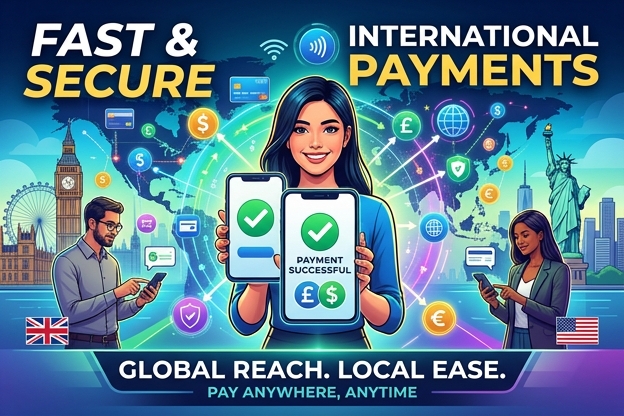
An international payment gateway is the technology layer that securely processes payments from customers in different countries, currencies, and payment ecosystems. It connects your checkout or billing flow to acquirers, card networks, fraud tools, and settlement systems so global buyers can pay you with methods they already trust.
For a global business, it is not just a payment button. It is the engine behind authorization, currency conversion, compliance checks, fraud screening, and the final movement of funds into your business accounts.
Table of Contents
- What Makes a Payment Gateway Truly International
- Why Global Payment Setups Fail
- Core Features That Actually Matter
- Best Gateway Priorities by Business Model
- How to Choose an International Payment Gateway
- Risks, Costs, and Operational Limits
- A Real-World Perspective from Physical DeFi Card
- Where International Payments Are Heading
- Conclusion
- References
What Makes a Payment Gateway Truly International
Many providers say they support international payments. Fewer can support global selling at scale. A real international payment gateway does more than accept Visa or Mastercard abroad. It adapts to local payment behavior, region-specific risk patterns, currency needs, tax and compliance rules, and local banking relationships.
A strong setup usually includes:
- Multi-currency pricing and settlement
- Local acquiring to improve authorization rates
- Support for cards, digital wallets, bank transfers, and alternative payment methods
- Fraud screening tailored by region and transaction type
- Tokenization and PCI-compliant data handling
- Chargeback management and dispute evidence workflows
- Strong API and reporting access for finance and product teams
According to a 2024 report by Juniper Research, global ecommerce payment complexity is rising because merchants are expected to support more local methods while keeping fraud low and checkout friction minimal. That shift matters because customer preference is local, not universal. In one market, cards dominate. In another, bank redirects or mobile wallets do.
“Merchants expanding internationally often overestimate the value of broad method coverage and underestimate the value of local acquiring, settlement design, and fraud orchestration.”
The phrase “international gateway” should therefore trigger a checklist in your head: Can it help you get approved more often, settle faster, reduce FX leakage, and stay compliant as volume grows?
Why Global Payment Setups Fail
Most failed cross-border payment rollouts do not fail because a gateway is technically broken. They fail because leadership chooses based on brand familiarity or headline fees instead of operational fit.
Common failure points include mismatched payment methods, weak country coverage, poor routing logic, and settlement friction. A business may launch in Latin America with a card-only flow and wonder why conversion lags. Another may enter Europe without strong PSD2 handling, then see legitimate payments challenged or abandoned. Others lose margin through hidden cross-border fees, poor FX rates, and delayed payouts.
According to the Baymard Institute’s 2024 ecommerce checkout research, extra costs and trust concerns remain leading causes of abandonment, and payment friction is tightly connected to both. That friction is even more damaging when buyers are paying in a foreign currency or through an unfamiliar merchant entity.
There is also an internal problem. Finance wants predictable reconciliation. Product wants fast integration. Compliance wants clean audit trails. Operations wants fewer manual reviews. If the gateway does not serve all four functions well, payment growth creates payment chaos.
Core Features That Actually Matter
Local Payment Acceptance
Customers buy more readily when they can use methods they already trust. That may include cards, Apple Pay, Google Pay, SEPA transfers, local bank redirects, or regional wallets. For subscription businesses, recurring billing support and account updater tools are just as important as initial payment acceptance.
Smart Routing and Local Acquiring
Local acquiring means a transaction can be processed closer to the cardholder’s issuing bank. That often improves approval rates and lowers cross-border decline risk. Smart routing adds another layer by sending a payment through the best available path based on geography, BIN, issuer history, risk score, and currency.
Multi-Currency Pricing and Settlement
There is a major difference between accepting foreign cards and operating in multiple currencies well. You need to decide whether to price in local currencies, settle in one base currency, or hold multiple settlement balances. The right answer depends on margin sensitivity, refund volume, supplier obligations, and treasury structure.
Fraud Controls Without Killing Conversion
More rules do not always mean better protection. Too much friction can reject legitimate buyers, especially in markets with lower data consistency. Good gateways offer layered fraud tools such as velocity checks, device signals, 3D Secure optimization, behavioral scoring, and manual review controls.
Compliance and Data Security
PCI DSS alignment is table stakes. Depending on region and category, you may also need stronger KYC, AML monitoring, sanctions screening, PSD2 readiness, or documentation around funds flow. This matters even more for fintech, digital asset, gaming, and marketplace businesses.
Best Gateway Priorities by Business Model
No single gateway is best for every global company. The right choice depends on your business model, average order value, refund rate, geography mix, and operational tolerance for risk.
| Business Type | Primary Gateway Need | Biggest Risk | Best-Fit Focus |
|---|---|---|---|
| Direct-to-consumer ecommerce brand | High conversion across multiple currencies | Cart abandonment and FX margin loss | Localized checkout and wallet support |
| SaaS subscription platform | Recurring billing stability | Involuntary churn from failed renewals | Smart retries, card updater, dunning tools |
| Marketplace platform | Split payments and seller payouts | KYC failures and funds-flow complexity | Compliance workflows and reconciliation |
| Travel or digital services merchant | High approval for cross-border cards | Chargebacks and fraud spikes | Risk controls and dispute tooling |
| Fintech or crypto-adjacent brand | Flexible compliance-aware global acceptance | Banking restrictions and partner sensitivity | Specialized underwriting and multicountry support |
For many businesses, the best answer is not one provider but a stack: a primary gateway, local method add-ons, fraud orchestration, and fallback routing. That setup can be harder to manage, but it often produces better resilience and unit economics.
How to Choose an International Payment Gateway
The fastest way to regret a payment decision is to skip real testing. Procurement decks rarely show how a gateway performs when traffic spikes, issuers behave unpredictably, or refunds hit at scale.
Use this practical evaluation process:
- Map your target markets. List top countries, currencies, average transaction size, and preferred payment methods.
- Review authorization performance by region. Ask for benchmarks, local acquiring coverage, and retry logic details.
- Model all costs. Include processing fees, FX spreads, chargebacks, refunds, rolling reserves, payout timing, and integration overhead.
- Audit compliance fit. Check PCI posture, PSD2 handling, AML controls, sanctions screening, and your specific industry restrictions.
- Test the operational layer. Review reporting, webhooks, reconciliation exports, dispute workflows, and finance visibility.
- Run live pilots. Launch in one or two countries first, then compare conversion, approval, and fraud metrics against your baseline.
According to a 2025 Deloitte outlook on digital payments, businesses that treat payments as a strategic growth lever rather than a back-office utility are better positioned to expand internationally with less margin erosion. That lines up with what experienced operators see in practice: payment architecture often becomes a competitive advantage long before it shows up in a board slide.
“The best global payment systems are built for exception handling, not just happy-path checkout. The edge cases tell you whether the provider can support scale.”
Risks, Costs, and Operational Limits
Even the best international gateway comes with tradeoffs. Businesses should go in with clear eyes.
Hidden Pricing Complexity
The advertised transaction fee is rarely the full story. Cross-border assessments, currency conversion spreads, refunds, scheme fees, reserve requirements, and payout charges can materially change economics.
Regulatory Exposure
Operating across markets means handling overlapping rule sets. What is acceptable in one region may trigger enhanced review in another. For regulated or higher-sensitivity sectors, a provider relationship can also shift suddenly if banking partners revise risk appetite.
Dependency Risk
Relying on one gateway for all markets can create a single point of failure. Outages, account reviews, or country policy changes may disrupt revenue unexpectedly.
False Positives in Fraud Prevention
Aggressive screening protects against fraud but can suppress legitimate sales. This is especially harmful for first-time international buyers whose data patterns may look unusual to rigid scoring systems.
The smartest teams balance resilience with simplicity. They do not overbuild on day one, but they do leave room for redundancy, regional expansion, and treasury flexibility.
A Real-World Perspective from Physical DeFi Card
At Physical DeFi Card, we have seen firsthand that international payments are rarely a pure checkout problem. In one engagement, a fast-growing digital services company came to us after expanding into Europe and Southeast Asia. Their traffic was strong, but approval rates were inconsistent, refunds were slow, and finance had no clean way to reconcile settlements across currencies.
I remember reviewing the payment flow with the operations lead and realizing that the team had one gateway trying to do everything: local card acceptance, multicurrency billing, fraud control, and settlement reporting. On paper, it looked efficient. In reality, it created approval bottlenecks and left the finance team manually stitching together payout records every week.
We helped redesign the setup around market-specific payment behavior and cleaner treasury logic. The company introduced localized currency display, tightened risk rules for a few high-fraud corridors, and adjusted the settlement structure so refunds and revenue reporting matched more naturally. Within a single quarter, the merchant saw stronger authorization consistency and significantly less back-office friction.
In another case, I worked with a Web3-adjacent brand that faced partner hesitation because its previous payment flow looked too opaque from a compliance perspective. The commercial team thought the problem was provider coverage. It was not. The real issue was weak documentation around funds flow, identity checks, and dispute handling. Once those controls were redesigned and surfaced clearly, the gateway relationship became more stable and scalable.
That is where Physical DeFi Card adds value beyond a generic payment vendor conversation. The work is not just about “accepting payments globally.” It is about aligning payment acceptance, compliance expectations, operational reporting, and customer experience so the business can grow without tripping over its own infrastructure.
Where International Payments Are Heading
The market is moving toward more orchestration, more localization, and more pressure on merchants to control unit economics. Several shifts are worth watching closely.
Payment Orchestration Will Become More Common
Businesses with meaningful international volume are increasingly using orchestration layers to route transactions across providers, methods, and regions. This reduces provider concentration risk and can improve performance over time.
Local Methods Will Keep Gaining Share
Cards remain central, but they are no longer sufficient on their own in many countries. Wallets, account-to-account rails, and domestic transfer systems are becoming normal parts of an international checkout strategy.
Fraud Tools Will Get More Context-Aware
Static rule sets are giving way to models that better interpret behavior, geography, merchant category, and customer history. The opportunity is not just fraud reduction. It is better approval of good customers who do not fit a domestic-only pattern.
Settlement Strategy Will Matter More to CFOs
As cross-border revenue grows, treasury teams care more about payout timing, held balances, and conversion spread. Payment gateways will be evaluated less as software tools and more as financial infrastructure partners.
Conclusion
An international payment gateway can either accelerate global growth or quietly drain it through poor approvals, hidden costs, compliance stress, and customer friction. The strongest solutions support local payment behavior, protect margins, improve authorization rates, and give finance teams a cleaner operational picture.
Physical DeFi Card recommends three next actions for any business planning cross-border expansion:
- Audit your current payment funnel by country to identify approval gaps, abandonment patterns, and settlement pain points.
- Run a controlled pilot in priority markets before rolling out a single setup globally.
- Choose a gateway partner with operational depth, not just broad marketing claims, especially if your business model involves fintech, Web3, subscriptions, or multicurrency complexity.
If payments are central to your revenue engine, they deserve board-level attention. That is where better international infrastructure starts to pay for itself.
References
- Juniper Research, 2024 — Provided market perspective on the growing complexity of global ecommerce payments and the need for broader method support.
- Baymard Institute, 2024 — Supplied checkout research relevant to abandonment, trust, and friction in payment flows.
- Deloitte Digital Payments Outlook, 2025 — Supported the strategic view that payment infrastructure is a growth lever, not just a processing utility.
FAQ
What is an international payment gateway?
An international payment gateway is a platform that helps businesses accept and process payments from customers in different countries. It typically supports multiple currencies, local payment methods, fraud controls, and cross-border settlement.
How is an international payment gateway different from a regular payment gateway?
A regular gateway may process payments online, but an international payment gateway is built for cross-border complexity. That includes local acquiring, multicurrency pricing, country-specific compliance, and broader support for regional wallets or bank-based methods.
Why do authorization rates matter so much in global payments?
Authorization rate is the percentage of payment attempts approved by the issuing bank. A small improvement can translate into a major revenue gain, especially for high-volume merchants. Low approval rates often point to poor routing, weak local acquiring, or overly aggressive fraud controls.
What should I look for in International Payment Gateway: The Ultimate Guide for Global Businesses?
You should focus on practical selection criteria, not generic feature lists. Key points include:
Country coverage and local payment method support
Local acquiring and smart routing capability
Fraud tools, compliance posture, and dispute workflows
Settlement options, FX costs, and reporting quality
Can one gateway handle every country well?
Sometimes, but not always. A single gateway may be enough for early expansion, yet larger international businesses often use multiple providers or an orchestration layer to improve resilience, local coverage, and approval performance.
How can Physical DeFi Card help with global payment strategy?
Physical DeFi Card can help businesses evaluate gateway fit, reduce cross-border friction, improve operational clarity, and align global payment acceptance with compliance and treasury realities. That is especially valuable for businesses dealing with multicurrency complexity or fintech-adjacent risk.